Transform your business
For Indian business owners, project leaders and operations teams connecting procurement, stock, approvals and reporting.
Explore Construction ERPDiscuss ERP and business transformationYour Business Technology & Engineering Partner for ERP transformation, intelligent workflows and custom applications. Start with your business requirements, then agree the systems and engineering scope that fit.
Product screens show operational workflows. Floating chat and reminder panels are illustrative examples.
For Indian business owners, project leaders and operations teams connecting procurement, stock, approvals and reporting.
Explore Construction ERPDiscuss ERP and business transformationFor international technology companies, SaaS businesses and digital agencies assessing application development and integration work.
Explore Technology PartnershipsRecognise any of these?
Not every business faces all of them. Most of the organisations we work with recognise two or three, and that is usually where we begin.
Read: the six problems we keep findingPurchase, stores, accounts and sites each keep their own spreadsheet, so the same figure exists in four versions.
"Which sheet is the latest one?"
Tenders, quotations and invoices arrive as PDFs and scans, and someone reads every page to find the few fields that matter.
"Can someone find the EMD clause in that PDF?"
An order typed once on site is typed again in accounts and again in the stock register.
"I already entered this on site."
Requests and approvals move over calls, email and WhatsApp, with no record of where each one stands.
"Did that approval ever come through?"
Management learns about delays and overruns at month-end, when it is too late to act on them.
"Why are we only seeing this now?"
Generic platforms ask your team to change how it works to match their configuration screens.
"That is not how we do it here."
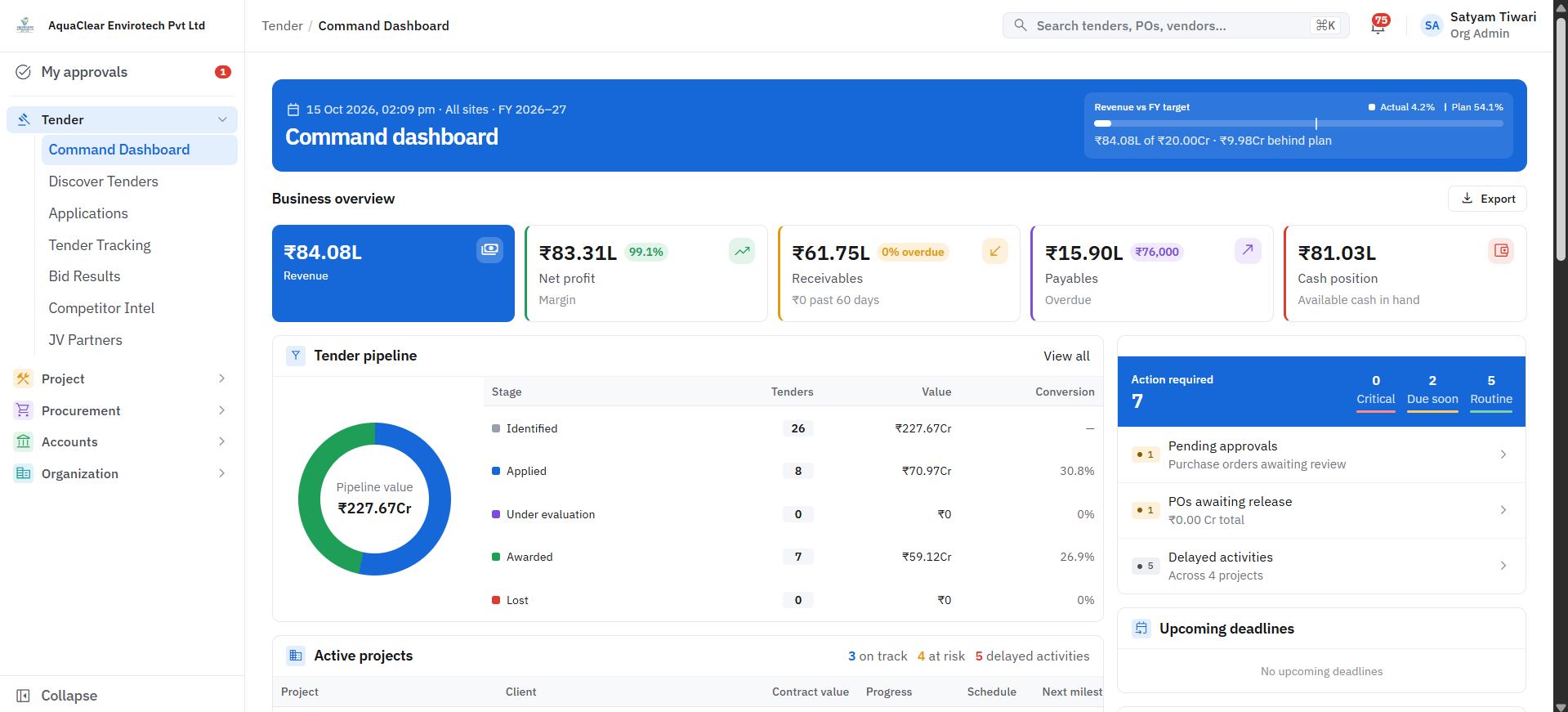
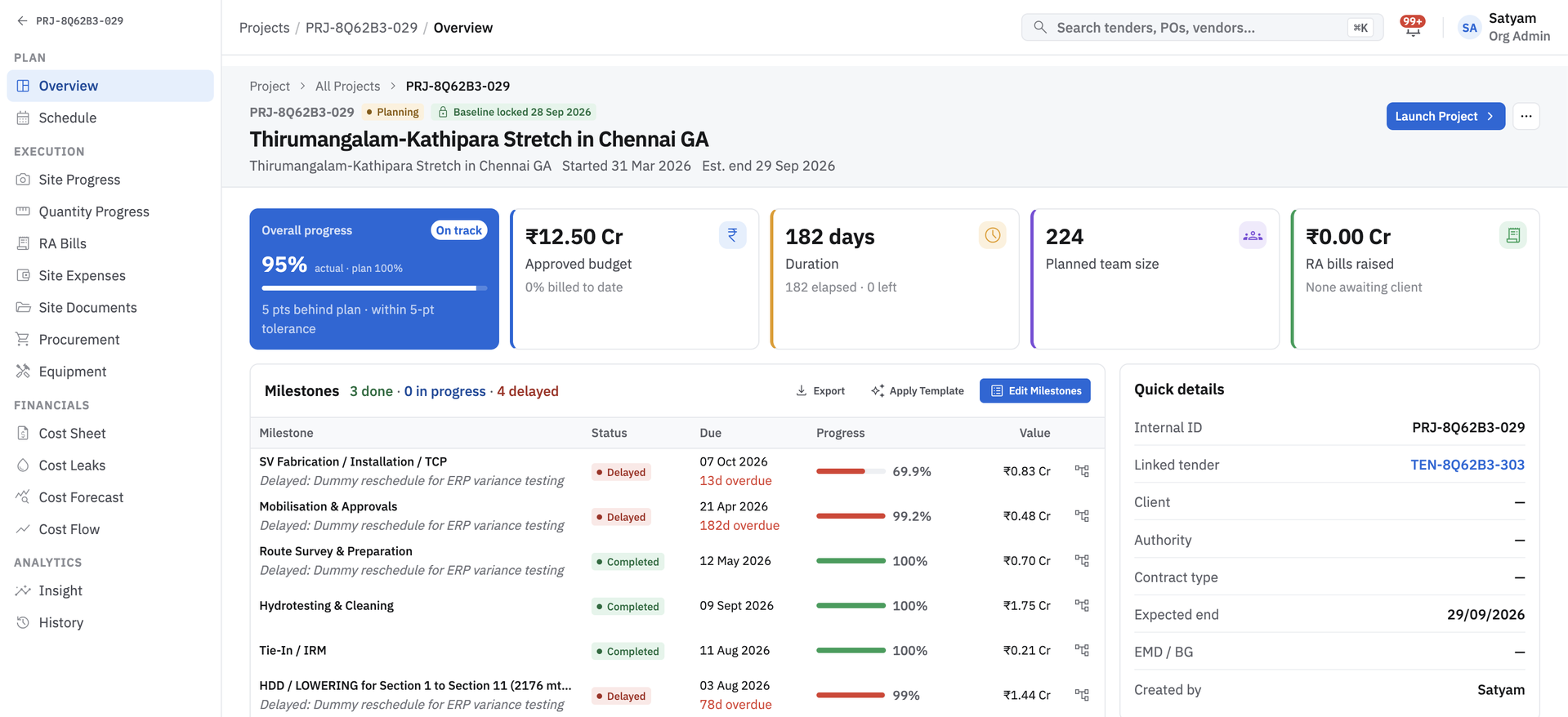
Purchase, Inventory, Finance, Projects, Approvals, and CRM operate on a single shared database, so a purchase order raised on-site reflects immediately in the finance queue and the inventory count, with no manual re-entry in between.
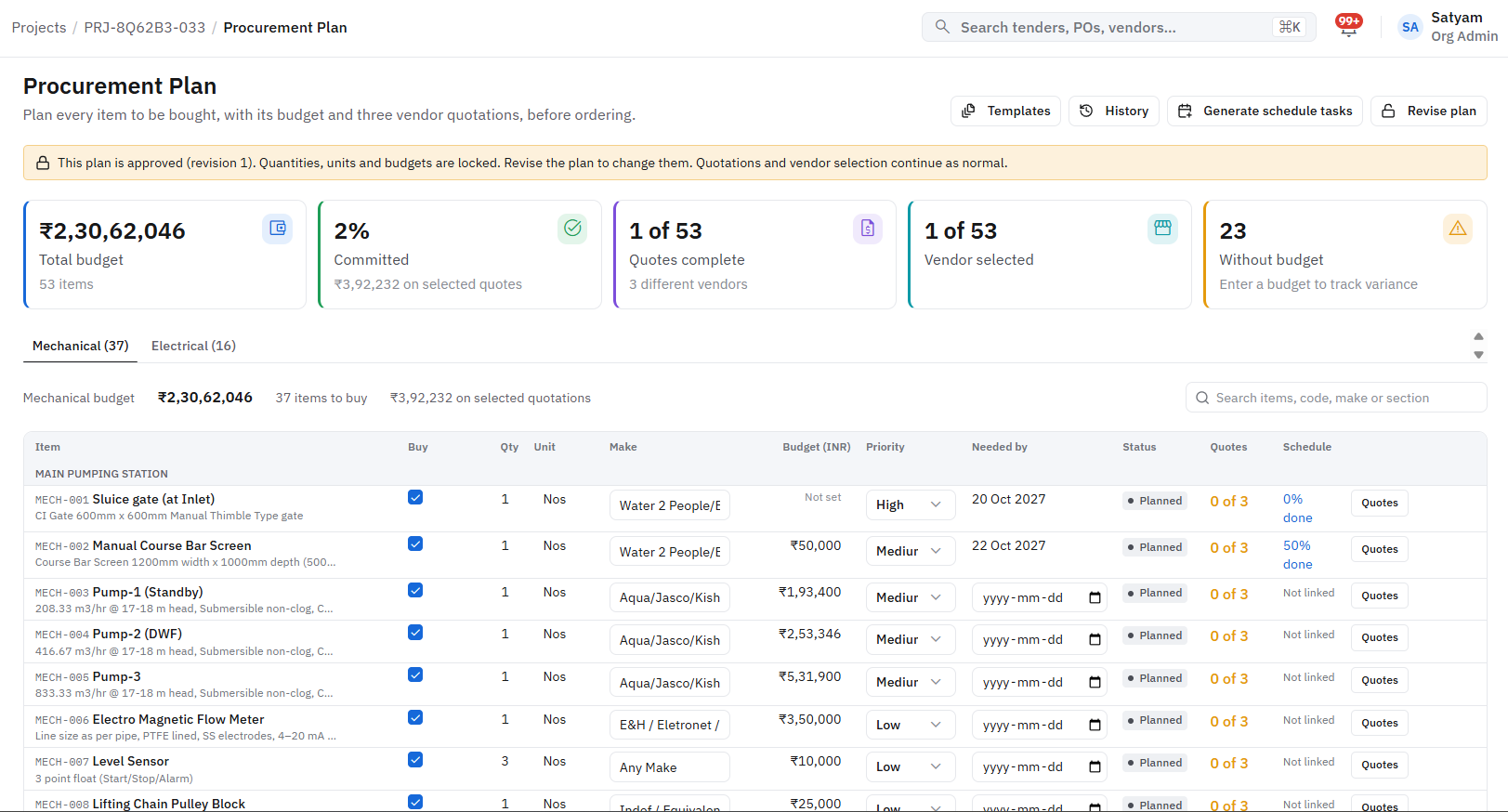
The order is raised once, on site.
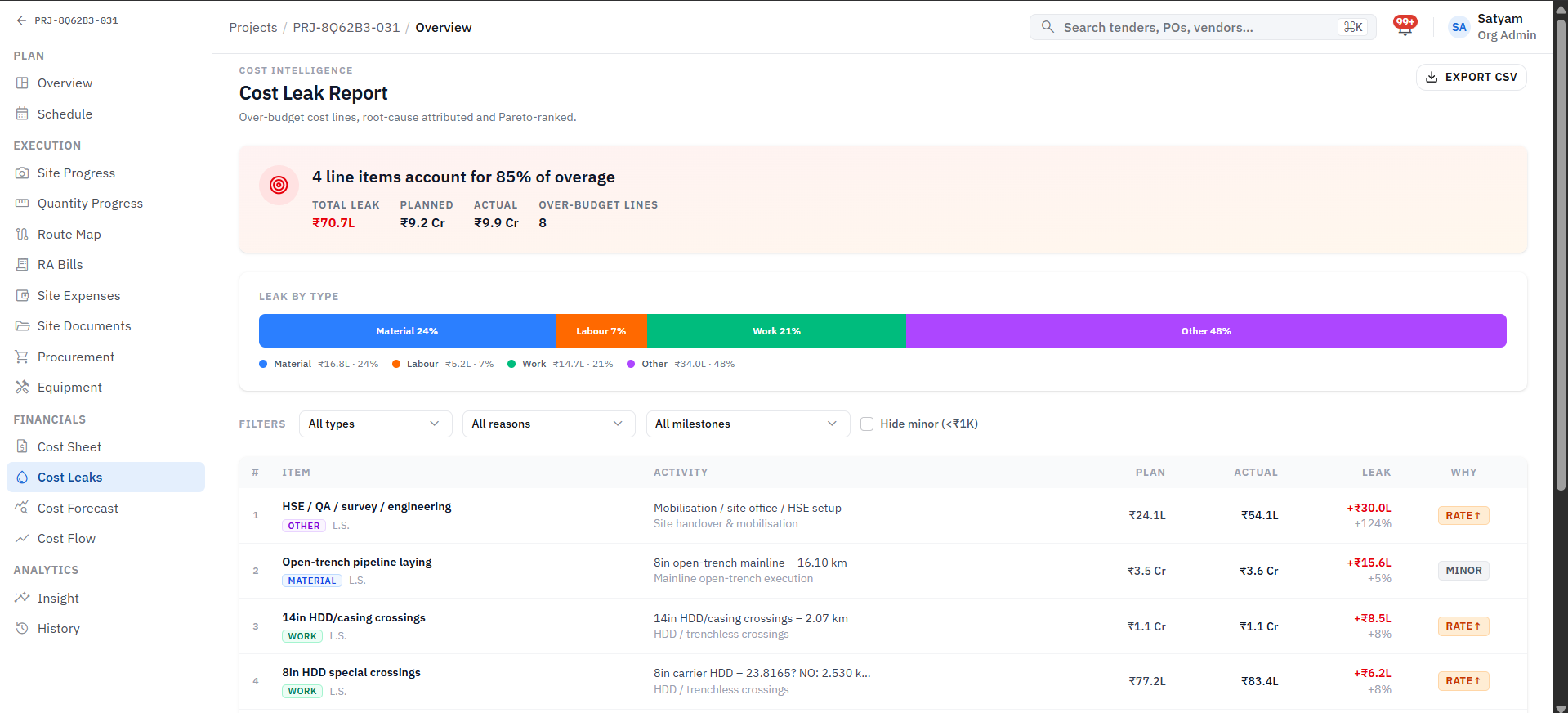
The same order is already in the finance view. Nobody re-types it.
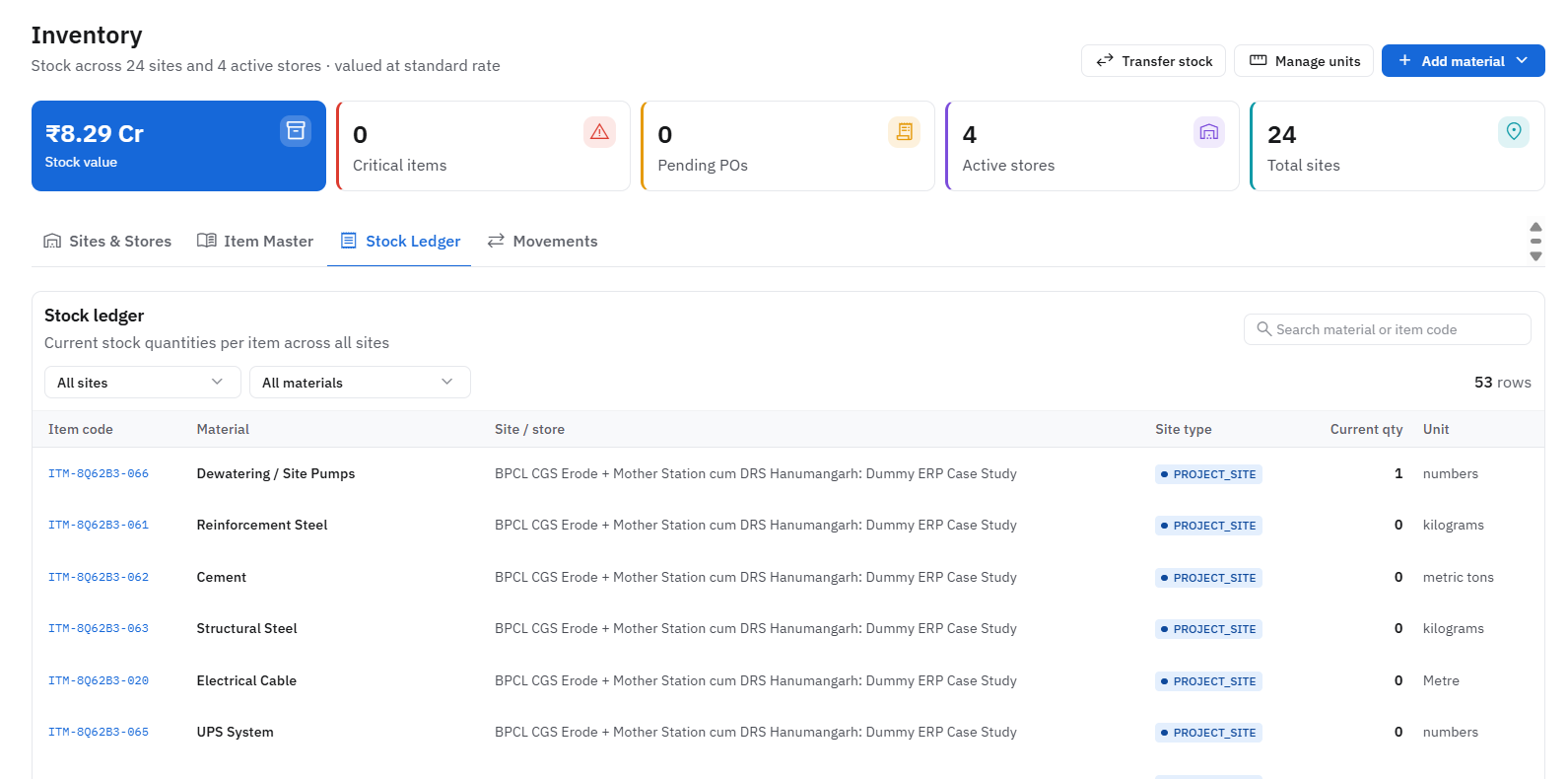
And the stock count knows what is on its way.
One entry. Every screen agrees.
Screens from a live Arjava project.

“Before Arjava, we had no visibility into what happened between approval and payment. Now every purchase and payment is tracked end to end, and I can see exactly where it goes from one dashboard, instead of piecing it together after the fact.”
Ankur Singh (Director, Shanti Infraconstruct)

“Procurement, stores, and billing were largely managed through Excel, phone calls, and WhatsApp, making it difficult to track transactions and identify discrepancies in real time. As a result, many issues only came to light during year-end reconciliation. With Arjava providing a single, integrated audit trail, businesses can now track transactions end-to-end, identify leakages earlier, and gain visibility into costs that were previously going unnoticed”
Kartik Singh (Director, S S Engineering Works Limited)
Smart automation
We build smart automation into the daily flow of your business. It takes the repetitive steps, and your team keeps the final say.
Tender notices, purchase orders and vendor quotations are read into structured fields. Before a bid goes out, the system checks every document against what the tender asked for.
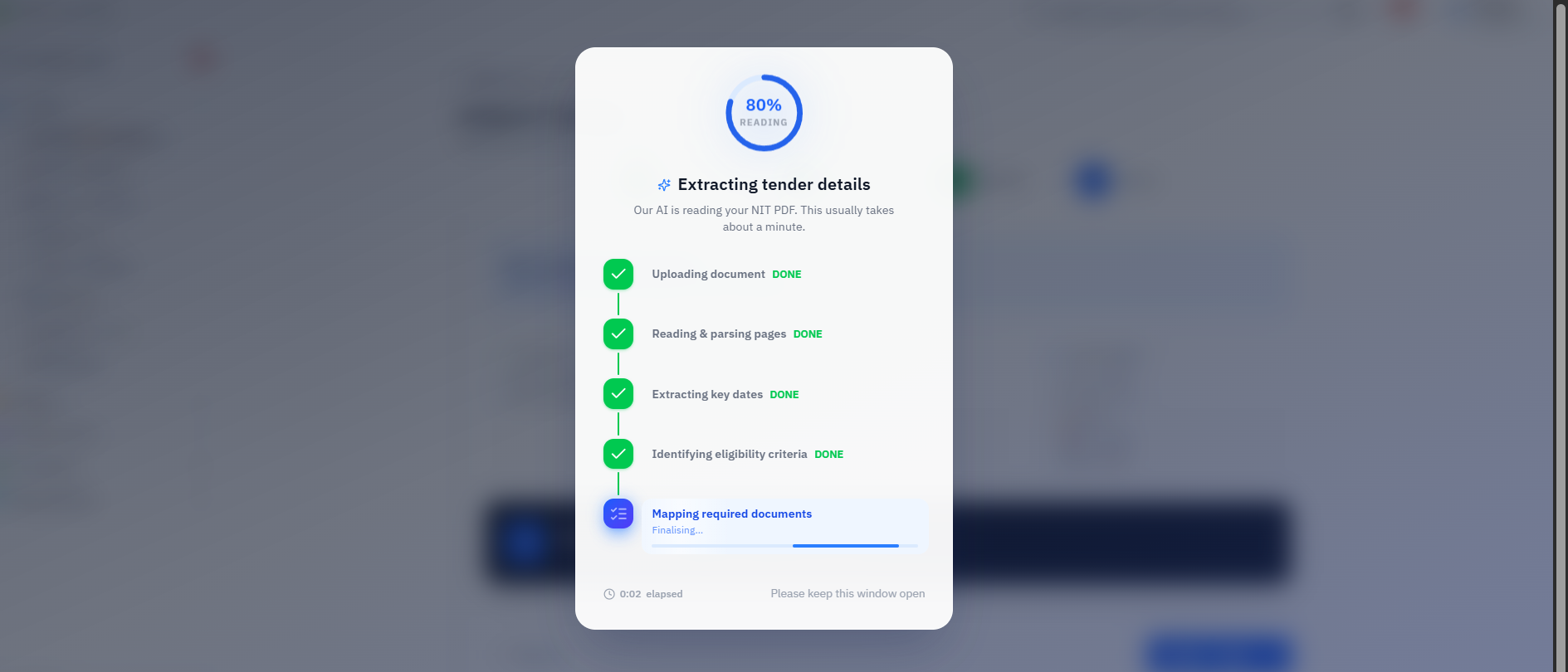
Before you submit
Stock, orders, payments and project progress, without opening any software. Type it, or just send a voice note from the site.
Arjava Chatbot
connected to your ERP
Tell it what, who and when. It schedules everything itself, then reminds you and the person responsible on WhatsApp.
Scheduled
Call the client about the site visit
Rakesh · Friday, 11:00 am · reminders a day before and on time
To you
Rakesh is due to call the client about the site visit today at 11 am.
To Rakesh
Reminder: call the client about the site visit today at 11 am.
Agents do the steps. Your team makes the call.
Every result lands in the same record as your tenders, orders and payments, and every flag is reviewed by a person.
Tender screen is from a live Arjava project. Check list, chat and reminders are illustrative examples.
Delivery approach
A transparent, structured route. Every step is a milestone you can see and track.
We learn how the business runs today: the people, processes, requirements, constraints and users. No assumptions.
You get: A map of how work really flows
Scope, priorities, workflows and the implementation approach are defined and agreed before anything is built.
You get: Scope and priorities you have signed off
The solution is developed or configured around the agreed requirements, module by module, with regular reviews.
You get: Working modules, demoed along the way
Important workflows and data are tested before the system becomes part of day-to-day operations.
You get: Workflows checked against your own data
The solution is introduced through an implementation approach that suits your teams, with data migration and training.
You get: Live on your server or cloud, team trained
We stay on after launch: monitoring, fixes and new capabilities as your requirements evolve.
You get: A direct line to the people who built it
How we typically run an engagement; the exact plan is agreed with each client.
In daily use at
Two engagements, walked through end to end in our case studies.
Oil & gas pipeline EPC company
32+ projects across 10+ states
₹3,30,000 saved on a single purchase order
Vendor rate history flagged a cheaper vendor already in the records; a landed-cost check confirmed it was still the better deal.
Water & environmental engineering firm
Wastewater and environmental projects · 400+ delivered
A tender caught before it went out invalid
Tender-to-billing mapped end to end and rolled out module by module. After a corrigendum moved the deadline, a bank guarantee validity alert flagged the problem before submission.
How we work
Plain commitments, taken from how we ran the engagements described in our case studies.
Discovery, business analysis and process mapping come first, and end with a map of your workflows that you agree to.
Working modules are demoed as we go, so you see progress well before go-live.
Workflows are checked against your real records before daily work depends on them.
We can deploy on your own server and domain, or in the cloud. One client runs it on its own infrastructure.
The team that mapped your process is the team you talk to when something needs to change.
AI reads documents and flags differences. A person reviews every result before it is acted on.
Scope and terms are agreed with each client. Ask us what a first phase would look like for your business.
Straight answers about how Arjava builds software around your business, what it costs to own, and what to expect during implementation.
Tell us what is going on in your business and we will tell you honestly where we can help.